


Running an Amazon business means data never sleeps. Product prices shift every hour. Competitor listings change without warning.
Reviews pile up faster than you can read them. If your Amazon data pipeline goes down even for a few minutes, you lose critical pricing intelligence and sales momentum.
So how do top Amazon sellers and marketers keep data flowing 24/7 without a single hiccup? It comes down to three pillars: scalable proxy infrastructure, proactive monitoring, and round-the-clock support.
In this guide, you will learn exactly how to build and maintain a high-availability data pipeline that hits 99.9% uptime.
Why Uptime Matters for Amazon Data Pipelines
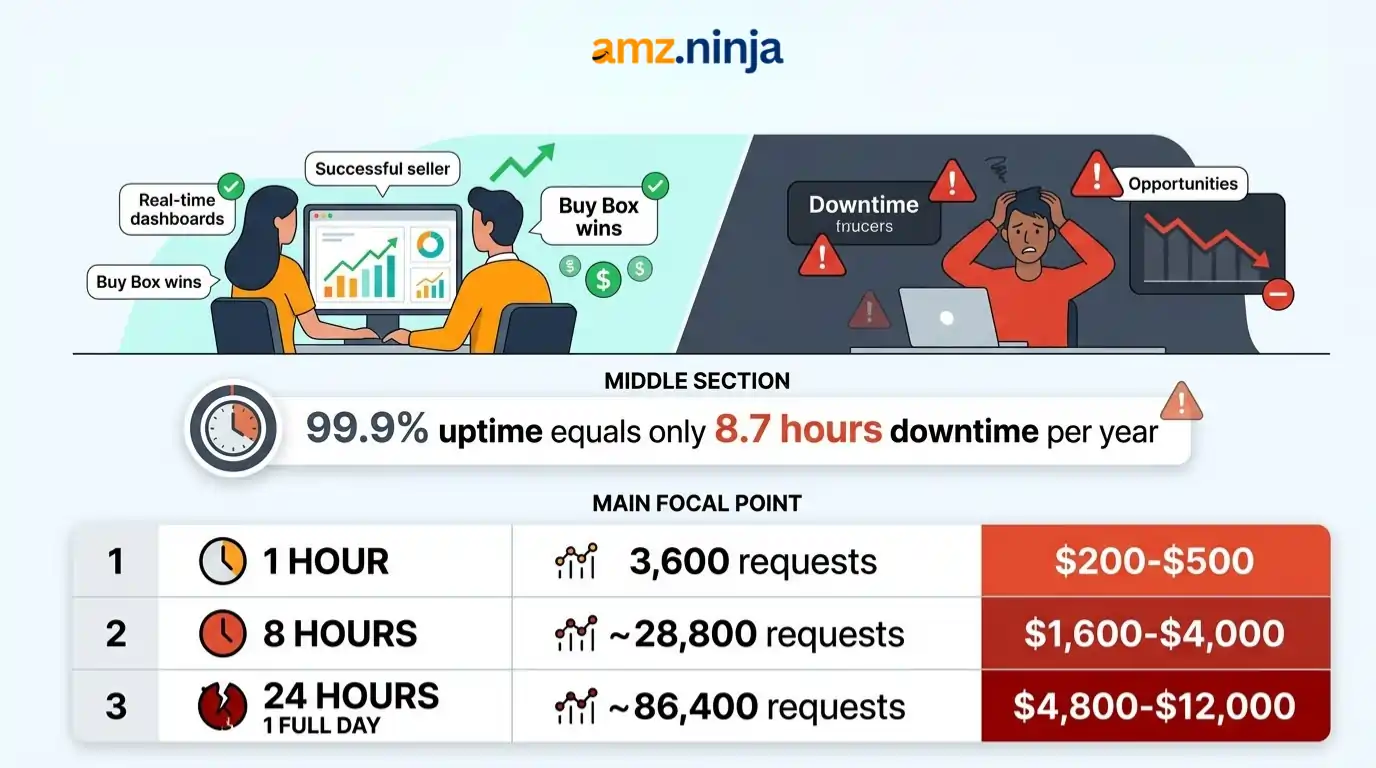
Amazon is one of the most competitive marketplaces on the planet. Sellers who track pricing, inventory, and reviews in real time win more Buy Boxes.
A 99.9% uptime target means only 8.7 hours of downtime per year. That sounds like a small number. But even a few hours of missed data can cost you thousands of dollars in lost repricing opportunities.
Here is what downtime actually costs:
| Downtime Duration | Missed Data Points | Potential Revenue Loss |
|---|---|---|
| 1 hour | ~3,600 requests | $200–$500 |
| 8 hours | ~28,800 requests | $1,500–$4,000 |
| 24 hours | ~86,400 requests | $5,000–$12,000 |
Every minute your pipeline is offline, competitors adjust prices while you stay blind.
Building a Scalable Proxy Infrastructure for Amazon Scraping
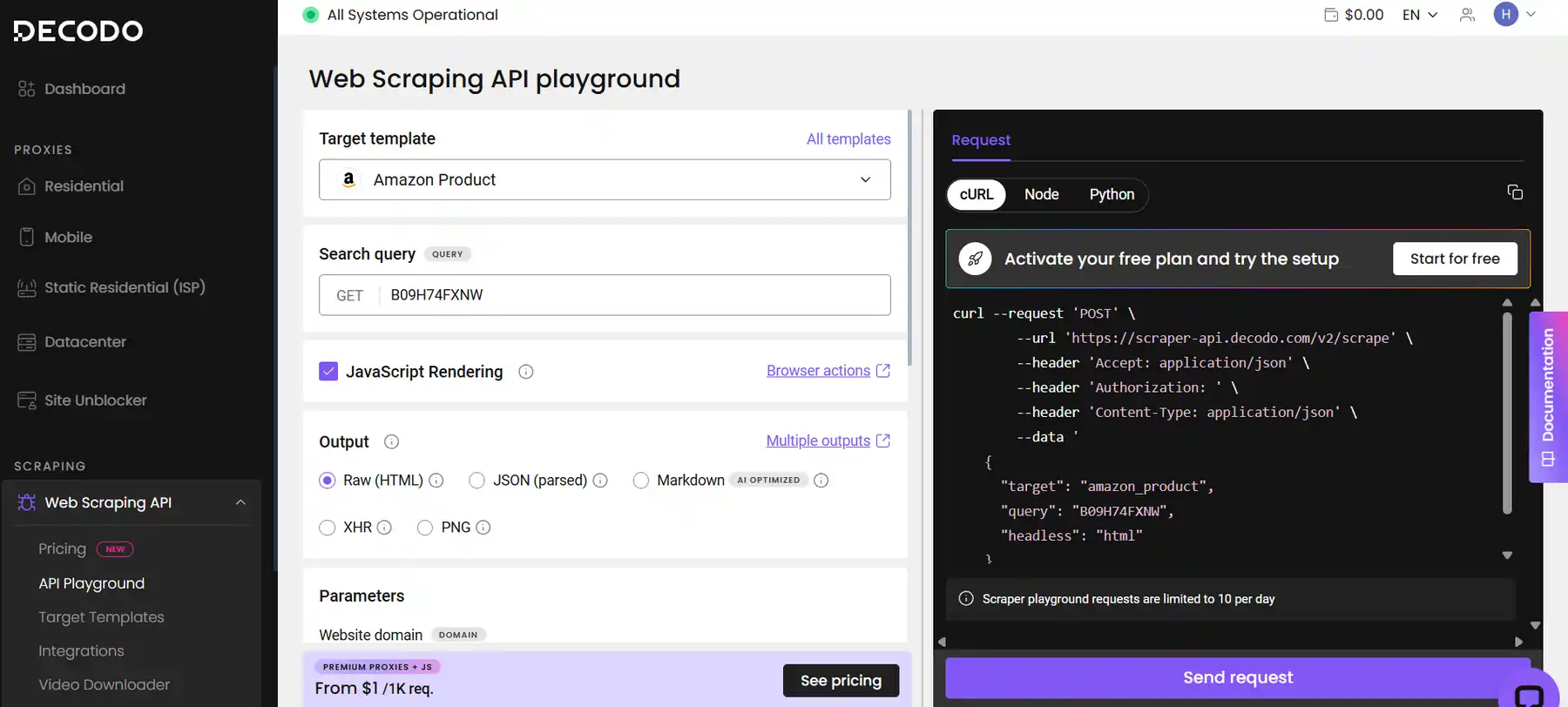
You cannot maintain continuous data extraction from Amazon using a single IP address. Amazon's anti-bot systems will block you within minutes.
A proper setup requires a large-scale rotating proxy network that distributes requests across millions of IPs. Here is what a reliable infrastructure looks like:
Decodo checks every single box on that list. With over 125 million IPs across 195+ locations, Decodo gives Amazon sellers one of the largest proxy pools available today.
Every connection runs through an intelligent load balancing system that routes traffic to the closest and fastest node.
Dead or slow IPs get replaced instantly from reserve pools. You never have to worry about connection drops mid-scrape.
How Decodo Delivers High System Availability and Reliability

Uptime is not just about having lots of IPs. It requires a well-engineered backend that handles failures gracefully.
Decodo's infrastructure is built on geo-redundant server nodes spread across multiple data centres. If one node fails, traffic automatically reroutes to a healthy one. Sellers experience zero interruption.
Here is how Decodo maintains high system availability:
Independent benchmarks back up these claims. Decodo achieved a 99.86% infrastructure success rate across all proxy types. For Amazon scraping, that kind of reliability keeps your pipeline humming day and night.
Setting Up Proactive Monitoring for Your Amazon Data Pipeline
You cannot fix problems you cannot see. That is why proactive pipeline monitoring is non-negotiable for maintaining uptime.
A strong monitoring setup catches issues before they snowball into full outages. Here is what you need:
Real-time dashboards are a must. Decodo provides a built-in dashboard that tracks session health, latency spikes, and usage breakdowns in real time. You can spot a failing connection before it affects your data flow.
Set up automated alerting systems that notify you the moment error rates spike. Watch for HTTP 4xx/5xx responses, timeout increases, and sudden drops in successful requests.
Track these key performance indicators daily:
Pair Decodo's monitoring tools with Amazon CloudWatch if you run AWS-based pipelines. CloudWatch tracks CPU usage, memory, and data transfer rates across all services. Together, they give you full pipeline observability from proxy to storage.
Why 24/7 Live Support Changes Everything for Amazon Sellers
Even with perfect infrastructure, unexpected issues happen. A new Amazon anti-bot update, a sudden traffic spike, or a misconfigured rotation setting can disrupt your flow.
When problems hit at 3 AM, you need help immediately. Not a chatbot. Not a ticket queue.
Decodo offers 24/7 live technical support via LiveChat with an average response time of just 5 minutes. Every support agent is trained on proxy infrastructure and data pipeline troubleshooting. You talk to a real person who understands your Amazon scraping setup.
Most proxy providers gate live support behind enterprise plans. Decodo makes it available to everyone, regardless of plan size. That is a massive advantage for solo sellers and small teams running lean operations.
Optimising Your Amazon Data Pipeline for Maximum Uptime
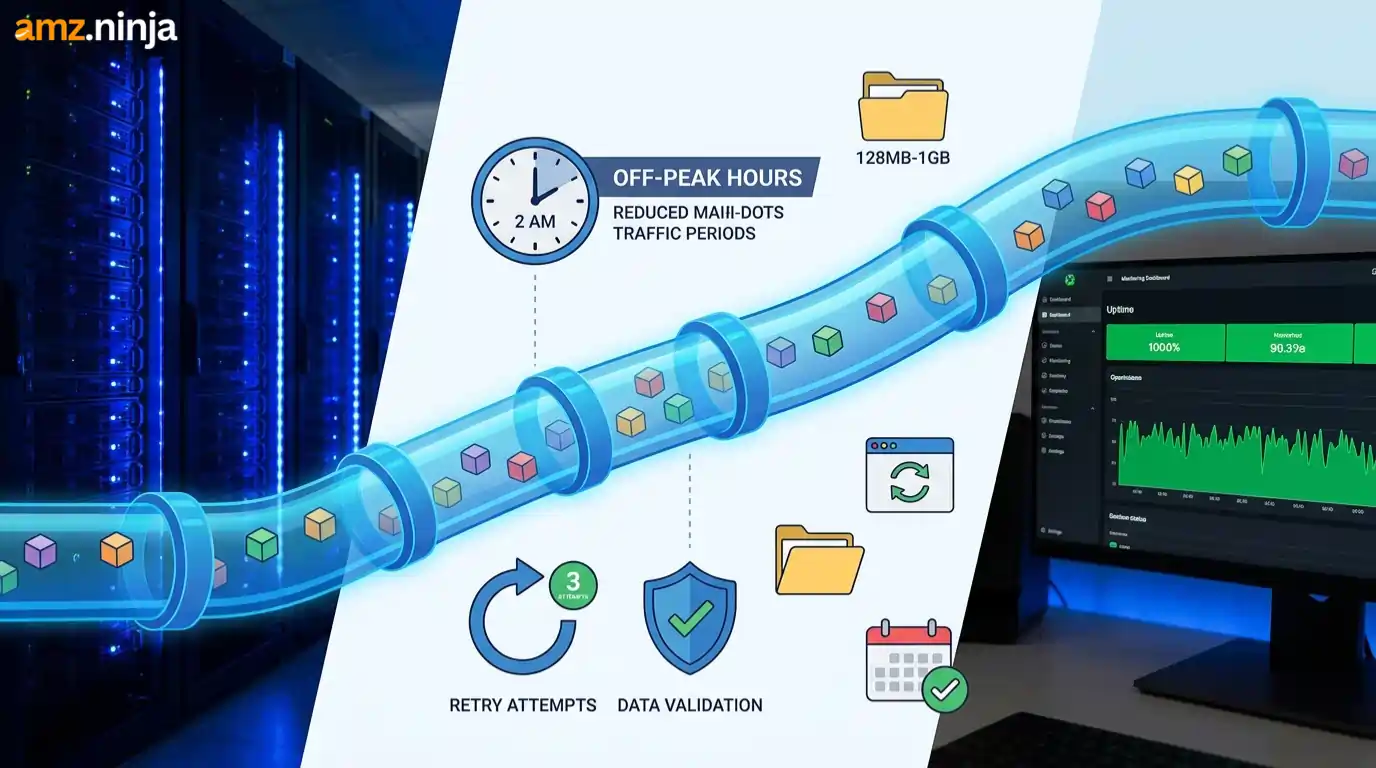
Getting infrastructure right is half the battle. Smart pipeline design keeps everything stable over time.
Batch your API requests during off-peak hours when possible. Amazon's rate limits are stricter during high-traffic windows. Spreading requests reduces block risk.
Implement retry logic in your scraping scripts. If a request fails, your system should automatically retry with a fresh IP. Decodo's rotation engine makes retries almost invisible since every new attempt comes from a different address.
Use data validation checks at every pipeline stage. Verify schema, check for missing fields, and flag anomalies before bad data enters your analytics stack. AWS Glue and Lambda functions work well for automated data quality checks.
Keep file sizes between 128 MB and 1 GB when storing data in Amazon S3. Smaller files create overhead. Larger files slow down parallel processing.
Rotate your user agents alongside IP rotation. Amazon tracks browser fingerprints just as aggressively as IP addresses. Decodo handles anti-fingerprinting automatically, serving fresh headers and user agents with every request.
Schedule periodic pipeline health audits every week. Review success rates, check for gradual latency creep, and validate that rotation intervals still match Amazon's current rate limits. Prevention always beats firefighting.
Decodo vs. Managing Proxy Infrastructure In-House
Some sellers consider building proxy infrastructure from scratch. Here is why that rarely makes financial sense:
| Factor | In-House Setup | Decodo |
|---|---|---|
| IP Pool Size | Hundreds to low thousands | 125M+ residential IPs |
| Global Coverage | Limited regions | 195+ locations |
| Maintenance Cost | $2,000–$10,000/month | Starts at $1.50/GB |
| Failover System | Manual configuration | Automated and instant |
| Support | Internal team required | 24/7 live chat included |
| Setup Time | Weeks to months | Minutes to hours |
| Anti-Detection | Custom development needed | Built-in fingerprint rotation |
Building your own proxy pool also means handling IP sourcing, server maintenance, and compliance. Decodo removes that operational burden entirely so you can focus on growing your Amazon business.
How to Keep Your Amazon Data Pipeline Running at 99.9%
Maintaining near-perfect uptime for Amazon product data extraction is not a one-time setup. It requires reliable infrastructure, smart monitoring, and a support team ready to jump in when needed.
Decodo delivers all three with confidence. A highly scalable proxy infrastructure with 125M+ IPs across 195+ locations. Proactive monitoring tools built into every dashboard. And 24/7 live support available to every single user with a 5-minute average response time.
If you are serious about running competitive Amazon data pipelines that never miss a beat, Decodo is the infrastructure partner built for exactly that.
👉 Start a free trial with Decodo today and see what 99.9% uptime actually looks like.

Get 25% OFF on SmartScout
25% discount for first 3 months on any subscription plan